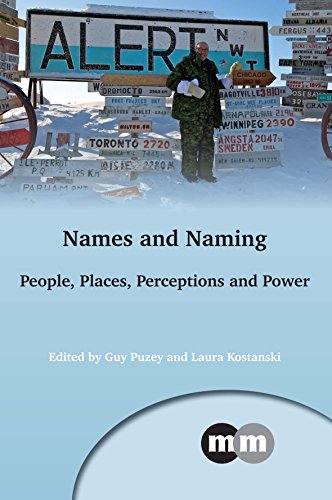
By Guy Puzey,Laura Kostanski
This ebook explores overseas traits in naming and contributes to the turning out to be box of onomastic enquiry. Naming practices are considered the following via a serious lens, demonstrating a excessive point of political and social engagement with regards to how we identify humans and locations. The participants to this booklet study why names aren't in basic terms symbols of someone or position, but additionally manifestations of cultural, linguistic and social historical past of their personal correct. offering analyses of geographically and culturally different views and case reports, the e-book investigates how names can signify deeper sorts of id, act as items of attachment and dependence, and replicate neighborhood mores and social customs whereas functioning as strong mechanisms of inclusion and exclusion. The booklet can be of curiosity to researchers in onomastics, sociology, human geography, linguistics and history.
Read Online or Download Names and Naming: People, Places, Perceptions and Power (Multilingual Matters) PDF
Similar human geography books

New PDF release: Policy Coherence in Development Co-operation (Routledge
Within the Nineties, a shared conviction emerged between reduction donors that their rules will be extra coherent. The force in the direction of elevated coverage coherence got here as a reaction to a kingdom of coverage incoherence. The moving grounds of coverage coherence in improvement co-operation are defined during this volume.
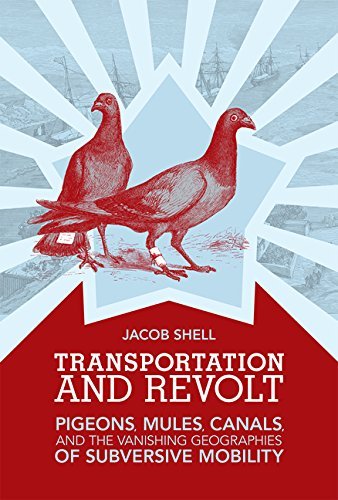
Read e-book online Transportation and Revolt: Pigeons, Mules, Canals, and the PDF
In the course of international struggle I, German infantrymen shot down provider pigeons for worry the birds have been wearing enemy communiqués; in Mexico, the U.S., and different international locations, mules have been used for smuggling and mystery trip in mountainous parts; within the British Empire within the past due 19th and early 20th centuries, the British feared that offers for anti-imperialist uprising have been being transported by means of canal.

The fundamental thesis of the paintings is that environmental difficulties are just to be solved by means of humans - those who could be required to make worth decisions in conflicts that transcend narrowly conceived human issues. hence humans require not just a moral method, yet a fashion of conceiving the realm and themselves such that the intrinsic price of lifestyles and nature is clear, a procedure in accordance with 'deep ecological principles'.
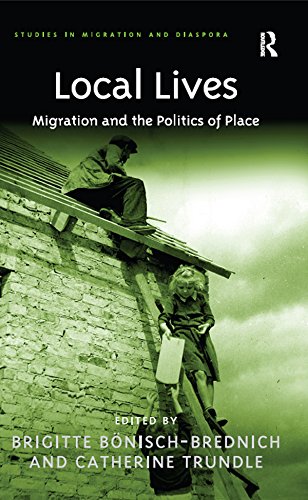
Neighborhood Lives contests dominant developments in migration thought, demonstrating that many migrant identities haven't turn into completely diasporic or cosmopolitan, yet stay both all in favour of emplaced belonging and the anxieties of being uprooted. by means of addressing the query of the way migrants legally and symbolically lay declare to possessing and belonging to put, it refocuses our realization at the micro-politics and daily rituals of place-making, which are vital to the development of migrant identities.
- Wilderburbs: Communities on Nature's Edge (Weyerhaeuser Environmental Books)
- Globalizing South China (RGS-IBG Book Series)
- Carceral Spaces: Mobility and Agency in Imprisonment and Migrant Detention
- Spiritualizing the City: Agency and Resilience of the Urban and Urbanesque Habitat (Routledge Studies in Urbanism and the City)
- Large Infrastructure Projects in Germany: Between Ambition and Realities
- The Chinese City
Additional resources for Names and Naming: People, Places, Perceptions and Power (Multilingual Matters)
Sample text
Names and Naming: People, Places, Perceptions and Power (Multilingual Matters) by Guy Puzey,Laura Kostanski
by James
4.0
